

Bathing Water in Windermere: Is it safe to swim?
We have been quiet recently, but we have been busy behind the scenes.
Today we want to share something difficult: real stories from people who have suffered serious illness after entering the water in Windermere.
As a campaign, we are mindful about how we talk about swimming in the lake. Many people swim in Windermere regularly without problems, and we strongly believe that connecting with nature is important for both physical and mental wellbeing.
But the stories we receive cannot be ignored.
We have recently been contacted by two people whose experiences in Windermere last summer had severe consequences. Their stories illustrate why the current system used to assess water safety on the lake is failing.
Alongside these accounts, we are also setting out a clear and practical change that must be implemented before this year’s bathing water season begins.
Working with Tim Farron MP, Liberal Democrat spokesperson for Environment, Food and Rural Affairs, we are now taking this directly to the government. You can read the coverage of this story in The Guardian.
Why we rarely tell these stories
Some swimmers in Windermere never encounter serious problems. In fact, members of our weekly Strike Against Sewage swim in the lake regularly, often every day. But they remain vigilant. Many avoid submerging their heads, and won’t swim when there have been sewage discharges or blue-green algae sighted, but, despite this caution, several have reported experiencing symptoms after swimming, including full-body skin rashes and vomiting.
As a campaign, we therefore tread a careful line.
We want people to experience the outdoors and to connect with nature. Outdoor swimming can be incredibly powerful for mental health and wellbeing, as it has been for many members of our team. There are many people who swim in the lake with no issue, but, increasingly, we are told stories that we believe need to be shared.
Following the Channel 4 docudrama Dirty Business, which shone a light on the tragic story of Heather Preen, who died after contracting an antibiotic-resistant E. coli infection, it is clear that these issues cannot be ignored.
Recently we were contacted by two people who had severe health experiences after entering Windermere last summer. We feel a duty to share their stories.
Claire’s story
On 26 August 2025, Claire and her family were kayaking on the lake near Brockhole Visitor Centre.
Claire noticed that the water looked murky that day, but had been reassured after checking the Environment Agency’s bathing water classifications and seeing that Windermere’s designated sites were rated “Excellent”. It became a trip they will never forget, for all the wrong reasons.
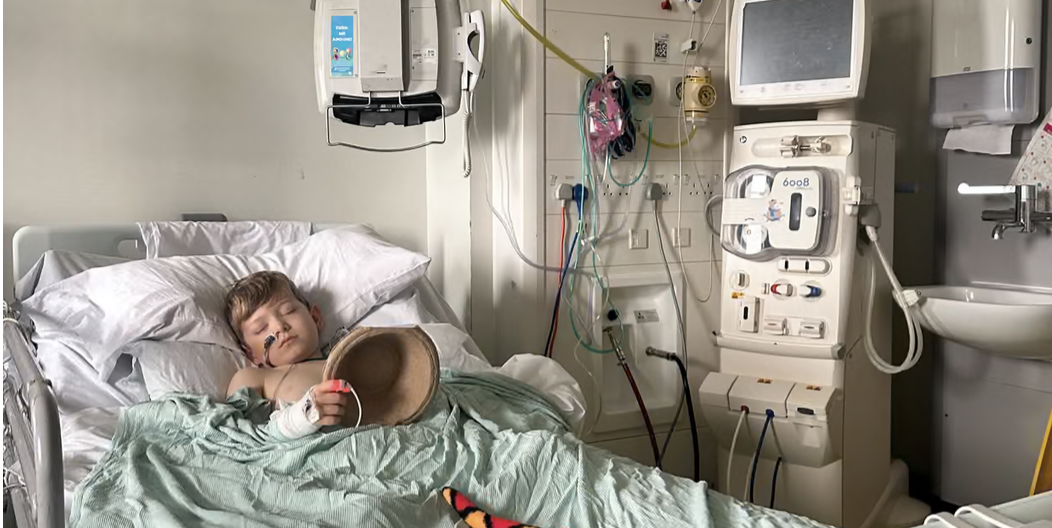
Shortly after being on the lake, Claire’s seven-year-old son became violently ill. His symptoms quickly developed in a way similar to Heather Preen's case described in Dirty Business. Her son was vomiting and bleeding from his backside. The initial 111 call saw Claire's concerns dismissed, with symptoms being attributed to “eating too much pizza”.
However, it quickly became clear that he needed urgent medical attention. After seeing their GP he was admitted to hospital within hours.
He spent three days in hospital before being transferred by ambulance to a regional children’s hospital when his symptoms worsened.
Doctors diagnosed him with haemolytic uraemic syndrome (HUS), a serious condition that occurs when an infection in the digestive system produces toxins that destroy red blood cells, block blood vessels and damage the kidneys. HUS is one of the leading causes of sudden kidney failure in children.
After four days, the toxin began affecting his brain and he started hallucinating.
Doctors confirmed that he had been infected with E. coli O157, a dangerous strain of the bacteria, and concluded that the infection had been contracted through contact with contaminated water.
He underwent two emergency operations, required dialysis to save his kidneys, received multiple blood transfusions and suffered several complications, including a collapsed lung.
In total, he spent six weeks in hospital.
Graham’s story
On 13 June 2025, Graham went swimming in Windermere with his children while they were taking part in a paddleboarding experience at the Swan Hotel in Newby Bridge.
He was only in the water for around thirty minutes, but over the following days he became seriously unwell.

He developed a urinary tract infection (UTI), something he had never experienced before. Normally these infections clear up quickly with antibiotics, but in this case the treatment had no effect and his condition deteriorated rapidly.
He was admitted to hospital with sepsis, a life-threatening condition in which the body’s response to infection damages its own tissues and organs.
Further tests revealed that he was suffering from an ESBL E. coli infection. Extended-spectrum beta-lactamase (ESBL) producing bacteria are resistant to many common antibiotics, making them extremely difficult to treat. These bacteria are commonly associated with faecal contamination.
After spending ten days in hospital receiving intravenous antibiotics, Graham was discharged and continued treatment at home.
But the infection did not go away. He went into septic shock and was admitted back to hospital for a further seven days.
Doctors carried out extensive investigations, including blood tests, MRI scans and CT scans. No other infections or underlying health conditions were identified. Graham is a fit and healthy 42-year-old man.
The consultant at Furness General Hospital told him that he believed the infection had likely been caused by swimming in Windermere. Graham had urinated while swimming, which the consultant explained could have provided a pathway for bacteria to enter the body through the urethra.
The consultant also told him that he had seen similar cases linked to the lake.
These stories could have ended very differently
Both Claire’s son and Graham were fortunate to survive. These experiences are difficult to read, but they are important.
They directly challenge the assertion that Windermere’s water quality is safe simply because official bathing water sites are classified as “Excellent”. These classifications are not fit for purpose and cannot be used to deflect from these real human stories.
Increasingly, independent evidence demonstrates that this classification does not reflect reality.
Independent testing tells a different story
In August 2025, Olympic marathon swimmer Hector Pardoe monitored water quality in real time while swimming Windermere as part of a record-breaking challenge across the UK’s three largest lakes to raise funds for Surfers Against Sewage.
During his Windermere swim, pollution data was collected in real time using an independent sensor, with additional samples sent for laboratory analysis.
The results recorded pollution indicators inconsistent with the lake’s “Excellent” bathing water status.
E. coli levels were recorded at eight times the safe limit during the swim. Inland bathing waters classified as Excellent are expected to have E. coli concentrations below 500 colony-forming units (cfu) per 100 ml. During the swim, readings reached 6,898 cfu per 100 ml.
This is not the first time that independent testing has raised concerns.

Source: The Guardian
The Guardian reported on this extensively last year following the publication of the Big Windermere Survey results, and small independent groups such as Ambleside Action for a Future (AAFAF) have carried out their own monitoring, which has produced similar findings.
Why the current system fails
To understand why Windermere can still receive an “Excellent” bathing water classification despite these findings, it is important to look at how the system actually works. One of the easiest ways to understand this is by looking at the number of samples that the Environment Agency takes at the ‘official’ bathing water sites, and also what they look for.
Scope Limitations
The Environment Agency only tests for two bacterial indicators: E. coli and intestinal enterococci.
Other pathogens linked to sewage contamination, including Campylobacter, Cryptosporidium, and other causes of gastroenteritis, are not included in the classification system, despite many of these cases being reported to us. Harmful blue-green algae blooms also do not affect bathing water status. You can learn more about that in our first bathing water blog.
Sampling Cadence
The number of samples taken is also very limited.
The bathing water season runs from 15 May to 30 September, a period of 139 days.
At the four designated bathing water sites on Windermere, the Environment Agency takes 19 samples on average during this period.
That means water quality is directly tested on just 14% of days during the bathing season.
Each sample only reflects conditions at the exact moment it is taken. It cannot show what happened earlier that day, later that day, or between sampling events.
To put this in perspective: imagine being presented with 139 cups of water and being told that only 19 had been tested. Would you feel confident choosing one at random to drink?
Geographic Limitations
The problem is also geographical. Windermere is 10.5 miles long, yet monitoring takes place at just four locations.
Large areas of the lake used by swimmers, kayakers and paddleboarders are never sampled at all.
Graham was not swimming at a designated bathing water site so the area where he entered the water was never tested by the Environment Agency.
Claire’s family were kayaking near Brockhole Visitor Centre, another location outside the designated sites, despite the Lake District National Park Authority advertising the location as a safe place to enter the lake for recreational activities such as paddleboarding.
Hector Pardoe swam the entire lake, almost all of which falls outside the monitored areas.
These stories are not just isolated incidents occurring outside of the designated bathing sites. Kate, another swimmer, contracted cryptosporidium, a parasite often associated with swimming in faecally contaminated water, after swimming by Beech Hill in 2023.
The Environment Agency’s response to pollution
Even when high pollution readings are detected, the system does not necessarily warn the public, and the EA’s response is often inadequate.
We asked the Environment Agency directly about a specific case where a very high E. coli reading was recorded at Fell Foot.
EIR Request: On 25 May 2022, an E. coli reading at Fell Foot saw a sample exceed 4,500 CFU/100 ml [bear in mind excellent status concentrations are <500 CFU/100ml E.coli] . Was this classified as a short-term pollution incident? If so, what was determined as the cause of this elevated level of E. coli? Additionally, what information measures were disseminated to warn people of this elevated level of E.coli in the water ?
EA Response: This is an individual result and did not classify as a short-term pollution incident. Whilst this is an elevated result, it is not reflective of overall conditions at this monitoring point, and the overall classification remained excellent for the 2022 bathing season. We receive results approximately three days after monitoring. Subsequent samples returned to expected levels, and no further action was taken. No further action was taken following this single result. The results for this current bathing season do not indicate any ongoing issues, with excellent status being maintained.
In other words, despite severe, potentially harmful levels of E.coli in the water being detected, no action was taken to inform the public. They used the general “Excellent” classification as a means to downplay the potential significance of this sample.
How the classification system masks pollution
The way bathing water status is calculated masks pollution events like this. If you examine the Bathing Water legislation, it becomes apparent that the calculations used make it very difficult for inland waters to receive anything other than an ‘Excellent’ status.
Rather than using a normal distribution, they use a lognormal distribution, which is designed to minimise the impact of extreme events. Typically for example, lognormal is used for things like rainfall statistics (e.g. ignoring 1 in 100 year extreme events). Instead of calculating means and standard deviations from the data directly, the distribution calculates them on the base10 logarithm of the data. In doing so, it compresses the ranges of data observed, so the mean is much closer to the typical data value.
The 95th percentile is calculated as the log data mean plus 1.65 standard deviations of the log data by this method, before being converted back into a result. In addition, the statistics are calculated over 4 years which also adds an extra level of smoothing if there’s a bad year. To give you an example of how a four-year average fails, in 2022 Fell Foot, one of the official bathing water sites on Windermere, if calculated on its own (rather than over four years), would have exceeded both targets, even on a log-normal plot, at 617 cfu and 204 cfu respectively at the two sites, and would have failed to meet Excellent status.
As a result, the classification system can fail to reflect real-world conditions in the lake and, as you can see in the EIR response from the EA, they use the classification to deflect from reality.
The bathing water sampling regimes, how the classifications are calculated and how pollution risks are communicated to the public are not fit for purpose on England's largest lake.
Our demand
This is why we are calling for an urgent change. We are asking for the Environment Agency’s National Pollution Risk Forecasting system to be extended to Windermere before the next bathing water season.
This system is already used at many coastal bathing waters. It provides daily forecasts of pollution risk based on rainfall, sewage discharges and environmental conditions. We want this to be extended to all sites on the lake where people can access the water.
Lake users deserve clear, real-time information about pollution risks in the water, enabling them to make informed decisions before entering the water. This could have prevented Claire and her family or Graham or Kate from entering the water.
Windermere currently receives no such forecasts, nor do we see any proactive sampling from the organisations that are supposed to keep swimmers safe.
The current annual bathing water classifications are failing to reflect the highly dynamic conditions in England’s largest lake, particularly during summer when recreational use is highest and sewage discharges and blue-green algal blooms continue to raise serious public health concerns.
What we are calling for
We are therefore calling for:
Pollution risk forecasting to be introduced for Windermere and other inland bathing waters, including forecasts of harmful algal blooms, such as the one that engulfed 5-miles of the lake in 2022.
A targeted sampling programme across the lake, not just at the four designated bathing water sites, to generate the data needed for reliable forecasting models.
A clear public information system, including an online portal and on-site signage, so lake users can make informed decisions about bathing and recreation.
An overhaul of bathing water classifications for lakes in England, to ensure they accurately reflect dynamic water conditions.
Taking this to Parliament
To support this call for action, we have worked with Tim Farron MP to raise the issue in Parliament.
He has tabled an Early Day Motion (EDM) highlighting the urgent need for change. The EDM is as follows:
That this House notes the urgent public health and environmental concerns arising from the water quality at Windermere; recognises that annual bathing water classifications do not reflect rapidly fluctuating bacterial concentrations or pollution events, including recorded sewage discharges to the lake, as evidenced by data from Save Windermere and the Big Windermere Survey; regrets that the National Pollution Risk Forecasting system currently provides no forecasts for any lake bathing waters in England; calls on the Government to extend the PRF system to the four designated bathing waters at Windermere as a matter of urgency; further calls for the development of a targeted, proactive sampling programme where necessary; and urges the establishment of a clear, publicly accessible web portal and appropriate on-site signage to communicate real-time pollution risk forecasts in order to protect public health
Our full statement, detailing our call for action can be downloaded below.
What you can do
We urge you, our supporters, to contact the Environment Minister, Emma Reynolds, to explain why the current bathing water classification system is not working for Windermere and what changes you would like to see.
If you have experienced illness after entering the lake, please contact us and share your story.
The most commonly reported symptoms include:
• ear infections
• eye infections
• skin rashes
• vomiting and gastrointestinal illness
These symptoms may appear hours or even days after swimming.
The more evidence we can gather, the harder it becomes to ignore the reality of what is happening in England’s largest lake.